Pakistan’s power sector has long been characterised by structural inefficiencies, heavy reliance on imported fossil fuels, and chronic supply disruptions. In 2019, more than 65 per cent of installed generation capacity came from thermal sources (gas, oil, coal)[1] which exacerbated the sector’s vulnerability.
Distributed solar power – particularly rooftop systems – offered a viable alternative. On‑site generation could reduce dependence on the grid, lower exposure to fuel price volatility, and improve supply reliability for productive sectors. Recognising the potential, Pakistan introduced net‑metering regulations and renewable energy targets under its 2019 Alternative and Renewable Energy (ARE) policy, which aimed to raise renewable generation capacity to 20 per cent by 2025 and 30 per cent by 2030[2].
At the time, cumulative net‑metered capacity stood at around 50 MW – approximately 0.12 per cent of the installed generation capacity[3]. Most installations were small residential systems, while the commercial and industrial (C&I) segment remained largely difficult to mobilise, leaving the sector fragmented and underdeveloped[4].The constraint was not demand, but market readiness.
Distributed solar lacked experienced local developers, bankable project structures, and a proven financing track record. Domestic lenders were unfamiliar with rooftop solar business models and wary of perceived technology, credit, and regulatory risks. Recognising this gap, PIDG – through InfraCo – partnered with Prism Energy to establish one of Pakistan’s first financed platforms for net-metered rooftop solar. PIDG committed USD 5.38 million in equity and technical assistance, targeting an initial aggregate installation capacity of up to 4 MW during the first fundraising round. Financial close was reached in 2020 during the height of the COVID-19 pandemic.
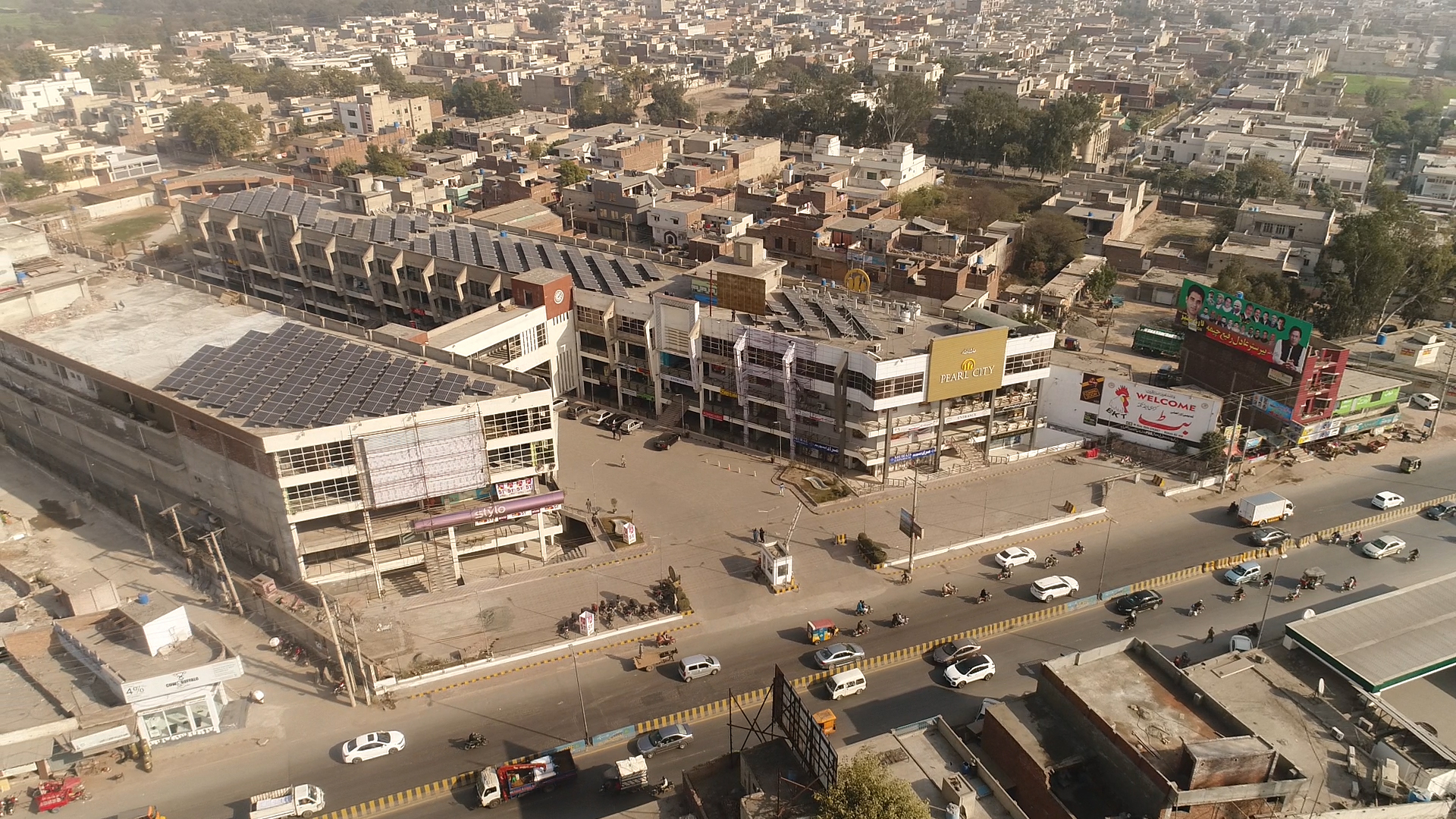
A defining feature of the Prism transaction was its use of portfolio financing. Operating under a build, own, operate, and transfer (BOOT) model, Prism Energy installed rooftop solar systems for C&I clients under long-term power purchase agreements (15–20 years), with ownership transferring to customers at the end of the contract period. Through this model, multiple rooftop projects were aggregated under a single financing facility, reducing transaction costs and diversifying risk. This was particularly advantageous to Prism Energy’s customers, comprising primarily local businesses, who may have struggled to obtain financing individually due to lower credit scores compared to bigger commercial international players. This financing model enabled an early proof of concept for financing C&I rooftop solar at scale, with the first transaction being a 248 kWp on Pearl City Tower, in Faisalabad, Pakistan.
From PIDG’s initial funding, Prism Energy installed 8.9 MW of rooftop systems for local textile, healthcare and food producers, overachieving the original target due to better-than-expected pricing from engineering, procurement and construction (EPC) contractors. As of May 2026, PRISM has installed 13 MWp of rooftop solar solutions with new sub-projects in the pipeline.
A year later in December 2021, PIDG supported Shams Power, a developer focused on small‑scale (0.5–5 MW) rooftop and ground-mounted solar projects for C&I customers. PIDG – through GuarantCo – provided two partial credit local currency guarantees – a USD 9 million facility in 2021 followed by a USD 4.04m facility in 2023, covering combined debt financing of PKR 3.5 billion (c. USD 16.2m) from Bank Alfalah Limited, alongside equity from Shams Power and IM Solar.
PIDG’s involvement, combined with credit risk mitigation, enabled Bank Alfalah Limited to extend long‑term local-currency loans under the State Bank of Pakistan’s (SBP) Financing Scheme for Renewable Energy (FSRE) – which supported validating third-party ownership and the delivery of solar-as-a-service at scale. The facilities supported the construction of c.29 MW of solar installations across Pakistan, supplying local and multinational clients including Coca‑Cola, Mondelez, Shifa International Hospital, and Government College University Lahore.
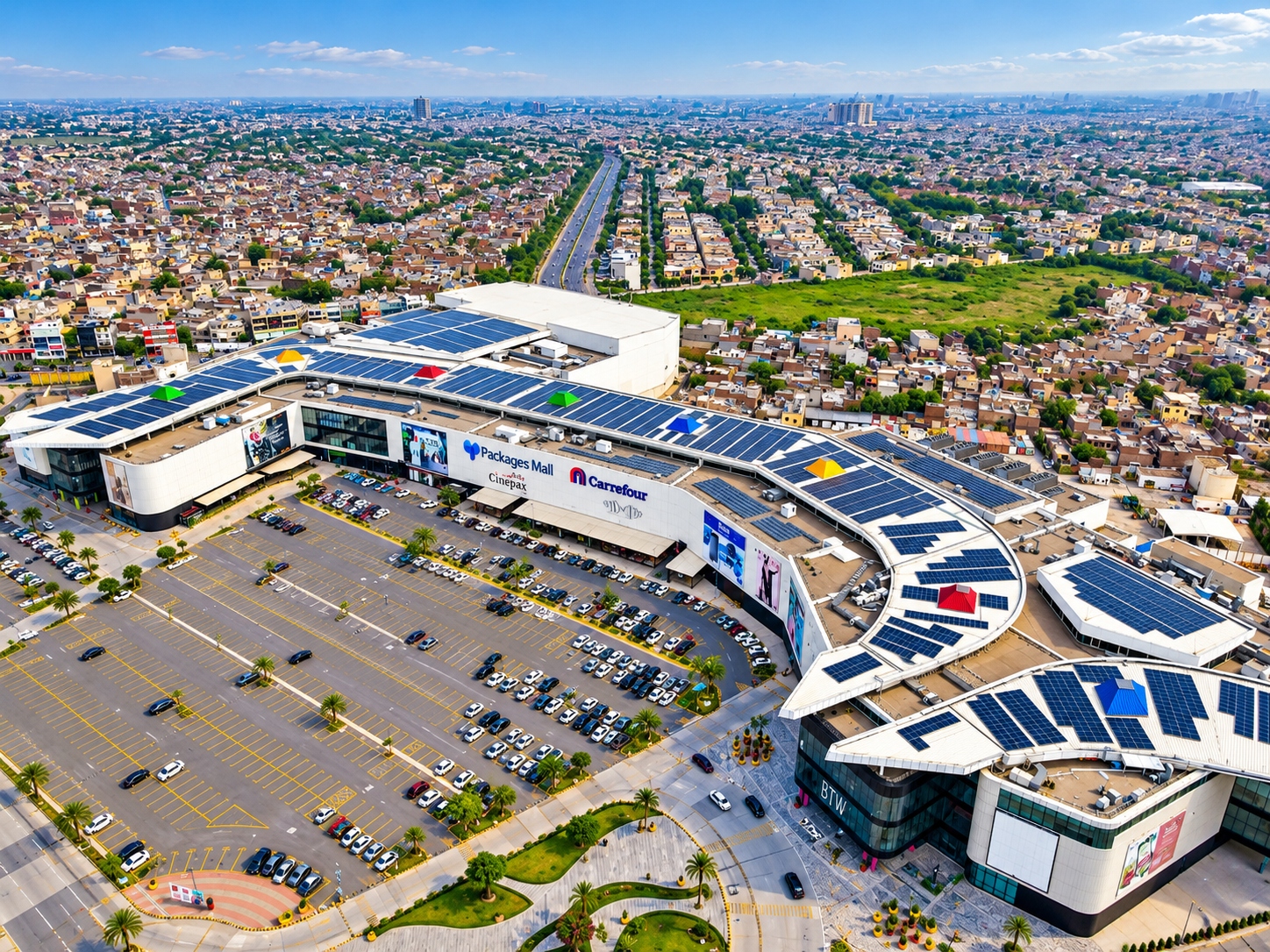
Together, these transactions helped transform market perceptions. By demonstrating viable contractual structures, portfolio aggregation, and long‑tenor local-currency lending, the Prism and Shams platforms reduced perceived risks for financiers and paved the way for new entrants. Since 2019, Pakistan’s net-metered rooftop solar capacity has expanded rapidly led by the residential rooftop solar segment, reaching c. 5,300 MW by June 2025, a more than 100‑fold increase.
The expansion of distributed solar has materially altered Pakistan’s power mix. Solar energy now contributes over 14 per cent of electricity generation, overtaking coal and reducing dependence on imported fossil fuels. PIDG’s support also helped build institutional capacity within domestic banks resulting in transactions like the 2021 SBP FSRE financing of c. PKR 36 billion for 521 renewable energy projects, and the 2022 Meezan Bank loan of PKR 580 million financing Burj Solar Energy’s 7 MW solar power plant – both proceeding without the need of credit guarantees. While momentum has slowed following the expiry of the SBP Financing Scheme for Renewable Energy in mid‑2024, the underlying market architecture remains in place.
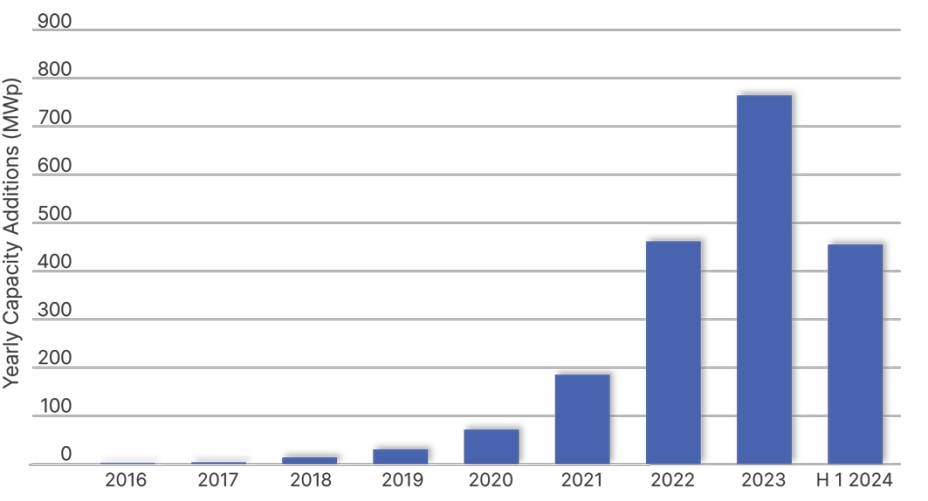
Policymakers have responded to this rapid growth by setting more ambitious targets – aiming for 60 per cent renewable power by 2030 – and by refining net‑metering rules and planning grid upgrades to manage system integration challenges[6]. While risks remain around grid stability and policy consistency, Pakistan’s power sector in 2026 is notably more diversified, resilient, and private‑sector‑led than it was in 2019 when PIDG first made an investment, with distributed solar emerging as a central pillar of that transformation.
[1] Pakistan Credit Rating Agency (PACRA) (2021). Power Generation: Sector Study.
[2] Government of Pakistan, Ministry of Energy (Power Division) (2019). Alternative and Renewable Energy Policy 2019 (Draft).
[3] Institute of Policy Studies Islamabad (2020). Distributed Generation Landscape in Pakistan. ‘0.12 per cent’ is PIDG’s calculation based national installed generation capacity taken from International Renewable Energy Agency (IRENA) (2025). Energy Profile: Pakistan.
[4] Institute of Policy Studies Islamabad (2020). Distributed Generation Landscape in Pakistan.
[5] Institute for Energy Economics and Financial Analysis (IEEFA) (2024). The Future of Net-Metered Solar Power in Pakistan.
[6] International Trade Administration (2024). Pakistan – Renewable Energy. Institute for Energy Economics and Financial Analysis (IEEFA) (2025). Net Metering Reforms and Grid Challenges Amid Pakistan’s Solar Rise.