People
C. 112,000 people are benefiting from an improved quality of power supply from the Technaf Solartech plant.
At least 100 people were employed during construction of the plant. 24 people are employed at the plant now it is operational.


| Company | Technaf |
| Sector | Power/Energy |
| Country | Bangladesh |
| Total Project Cost | USD 13.6 million |
| PIDG Commitment |
|
| Dates of PIDG involvement |
|
In 2008, Bangladesh set a target of 10 per cent of its national energy mix to come from renewable sources by 2020. However, the nascency of the market’s renewable energy sector meant that local financing solutions to support such projects were underdeveloped. At the same time, the domestic energy demand was increasing.
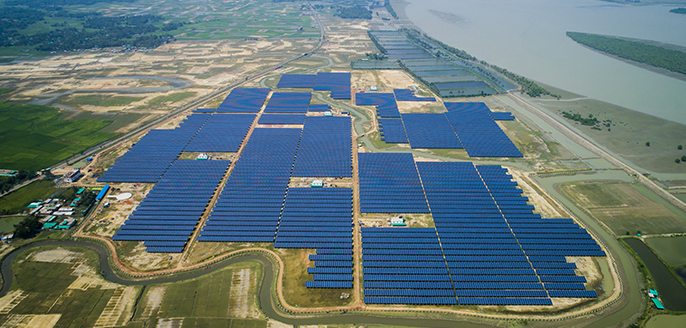
These associated risks for local banks lending to infrastructure projects in an untested domain meant that tenor and liquidity restrictions fell short of the actual finance requirements of renewable energy projects. For example, the Technaf solar power plant, Bangladesh’s first utility-scale solar project needed a 15-year financing solution to get off the ground, while the typical maximum tenor for infrastructure projects in Bangladesh at the time was just eight years.
In 2020, PIDG offered an innovative financing structure to Standard Chartered, the lending bank for the Technaf Solartech project. This combined a partial credit guarantee¹ with a liquidity extension guarantee² to support a USD 13.5 million dual currency financing solution. The guarantees helped mitigate both payment default risk and liquidity risk for the bank. This financially bankable deal was structured according to international standards.
The guarantee was unique in that it was shared across two tranches of debt in hard and local currency, US Dollar and Bangladeshi Taka respectively, which set another important precedent in the market.
PIDG’s intervention and partnership with local businessman Nuher Latif Khan served to make the project bankable and put it on the map as an attractive investment opportunity.
The liquidity extension guarantee allowed Technaf Solartech to benefit from a 15-year tenor for its loan, which was not available in the local market at the time, while also allowing Standard Chartered to exit the transaction after an initial eight years should there be liquidity constraints.
C. 112,000 people are benefiting from an improved quality of power supply from the Technaf Solartech plant.
At least 100 people were employed during construction of the plant. 24 people are employed at the plant now it is operational.
The solar power plant has an installed capacity of 28MWDC / 20MWAC, with an annual yield of 43,000 MWh.
At peak production in 2022, the plant supply covered up to 80 per cent of the existing electricity demand of the Teknaf region from a renewable source.
Increased reliance on renewable energy sources like solar is not only environmentally friendly but also reduces the drain on Bangladesh’s foreign currency being spent on importing costly fossil fuels.