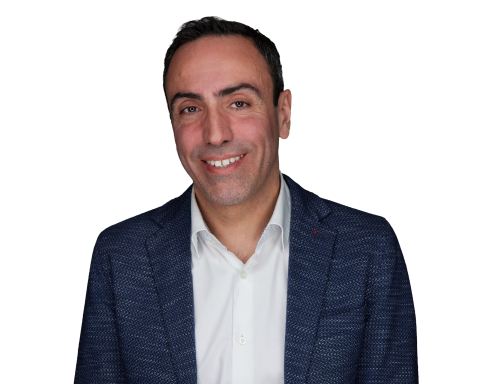

Today PIDG, Monetary Authority of Singapore and Clifford Capital announced first close of USD 250m under the Energy Transition Acceleration Finance (ETAF) Partnership. The ETAF is a blended finance fund under Singapore’s Financing Asia’s Transition Partnership (FAST-P) initiative. You can read the announcement here but stay with us for a few minutes to understand why it is significant. PIDG’s Chief Sustainable Impact Officer, Marco Serena, explains why collaboration for impact at scale is a key plank of our 2030 strategy, especially for climate action in Asia.
Participation from institutional investors is necessary to achieve scale for most asset classes anywhere in the world. One of the biggest constraints in Asia’s energy transition is the limited supply of opportunities that meet the scale and risk requirements of institutional investors. We must solve for it urgently given the region is warming at more than twice the global rate and fast-depleting biodiversity, putting billions of lives and trillions of dollars at risk.
This matters because the conversation is still too often framed as a question of whether enough concessional capital is available. In practice, many private investors are already looking for credible transition opportunities in emerging Asia. The challenge is that projects and markets are not always ready to align with institutional mandates. Pipelines remain fragmented, risk is not always priced or allocated clearly, and the market foundations needed to absorb long-term capital are still developing.
At the same time, the case for investment is broader than decarbonisation alone. Energy transition infrastructure in Asia also has to support sustainable development by improving reliability, expanding access and helping economies cope with heat stress, flooding and other climate pressures that are already affecting livelihoods and economies.
Blended finance has an important role to play to accelerate a transition that makes economic and geopolitical sense and yet is not advancing fast enough. Its purpose now needs to be broader than support for individual transactions. Used well, catalytic capital can speed things up, helping make renewable energy and transition assets more consistently investable as a category while improving the quality of infrastructure being built. It includes financing that supports mitigation by expanding cleaner power, and that strengthens adaptation and resilience by encouraging project designs that can work with nature to withstand landslides, cyclones and other physical climate risks over the life of the asset.
The priority has to be to help private investors build conviction through stronger structures, clearer standards and a track record they can rely on beyond a single deal – all without compromising on their fiduciary duties. Blended finance structures that use catalytic capital must be deliberate in what they seek, target specific financing constraints, avoid displacing already available private capital, and move on to fully commercial structure as soon as possible.
Patient equity, credit enhancement and risk-sharing tools including pooling assets are part of that approach. They help align emerging market transition assets more closely with the expectations of institutional investors by making risk easier to assess and allocate. This is vital while more consistent standards and track record emerge. When designed carefully, these tools can draw in new pools of private capital and allow scarce public resources to be used more effectively over time. That matters not only for capital mobilisation, but for sustainable development impact: better financed projects are more likely to reach construction, maintain service quality and deliver the mitigation, resilience and economic benefits that communities and businesses need.
We know that success breeds success. In Viet Nam, the Private Infrastructure Development Group’s (PIDG) investment in the Ninh Thuan solar project in 2018 helped bring one of the country’s first utility-scale solar plants to market at a time when the sector was still seen as difficult to finance. By working through issues around curtailment, contractual protections and lender confidence, the project helped show that these risks could be understood and managed. That had implications beyond one plant. Ninh Thuan contributed to the expansion of cleaner power in a fast-growing economy, helped demonstrate a pathway for further private investment in solar, and showed how better project preparation can support mitigation goals alongside longer-term energy security and resilience. Today the country’s solar capacity is over 19GW.
Partial credit guarantees, in particular, play a fundamental role in unlocking capital from insurance companies who have strict rating and risk requirements. By improving credit quality and helping issuers access longer-term institutional demand, they accelerate the development of local bond markets for sustainable infrastructure. GuarantCo, PIDG’s guarantee solution, helped pioneer three bond transactions in India last year which directly addressed renewable energy and sustainable development goals of the country. In the process it demonstrated how credit enhancement can mobilise hundreds of millions of dollars and create more repeatable pathways to finance the transition.

The pressure on Asia’s energy systems is growing, even as public resources remain stretched. Private capital will be essential, but mobilisation at the necessary scale depends on whether markets can offer credible pathways into transition assets. That is where catalytic finance remains valuable. Used strategically, it can help build markets that are easier for investors to enter and more capable of financing infrastructure that advances sustainable development, supports climate mitigation and is better prepared for the adaptation and resilience challenges that are influencing the region’s future.