Planet
The 60MWac plant has considerable potential for replication, promoting further development of Malawi’s solar resource. Salima is now exploring agrivoltaics to maximise the potential of the land.


| Company | Salima Solar |
| Sector | Power / Energy |
| Country | Malawi |
| Total Project Cost | USD 91.2m |
| PIDG Commitment |
|
| Dates of PIDG involvement |
|
The Government of Malawi recognises energy as a key driver of economic growth and is working to establish the regulatory frameworks needed to attract private sector investment to the sector. The government is also keenly aware of the need to mitigate the vulnerability of its current power supply to drought and fluctuating oil prices. High solar irradiation levels suggest that solar power could offer a viable addition to Malawi’s energy mix.
PIDG’s project development solution, InfraCo, was approached by JCM Power (JCM) – a leading developer of renewable energy projects in sub-Saharan Africa – and a local developer, Matswani, to co-develop the Salima Solar project, Malawi’s first commercial-scale solar Independent Power Producer (IPP).
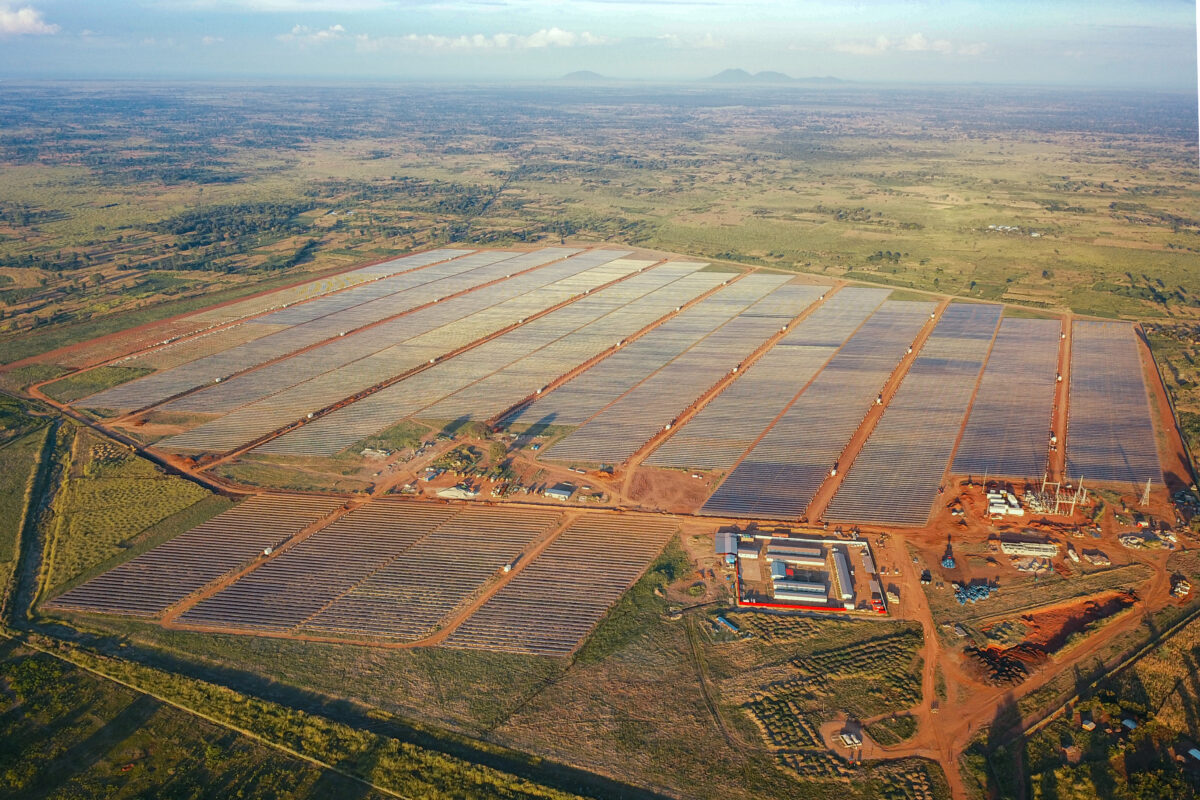
Situated 75km east of Malawi’s capital, Lilongwe, the project became operational in 2021 and now delivers up to 60MWac of power to Malawi’s national grid.
During construction, the project engaged a professional chef from Lilongwe to train a team of local women to prepare and serve free, nutritious meals for the construction team each day from the on-site African Food Kitchen facility.
The 60MWac plant has considerable potential for replication, promoting further development of Malawi’s solar resource. Salima is now exploring agrivoltaics to maximise the potential of the land.
The project delivers agricultural training and support for local farmers affected by the project, expanding its scope to benefit the wider community. As well as catalysing new opportunities for local businesses, the project has also created new jobs in the area.
The project leveraged a total committed project investment of USD 91.2 million. By demonstrating the efficacy of government regulatory frameworks, the project is expected to increase investor confidence and so facilitate future private and DFI investment into Malawi’s renewable energy sector.
By addressing the shortfall in energy supply, Salima Solar enhances the ability of wider initiatives to meet demand from newly connected consumers.
Grant funding was deployed for specialist studies, including the exploration of potential for beneficial community initiatives close to the project site. Technical assistance then supported drilling of water boreholes to supply clean water for nearby communities. A USD 6m viability gap funding grant accelerated progress to construction.