Climate risk
63 per cent of capital will support businesses and projects that are contributing to climate mitigation and can be classified as climate finance.

| Company | PIDG |
| Sector | Multi-sector |
| Country | Iraq |
| Total Project Cost | USD 35 million |
| PIDG Commitment |
|
| Dates of PIDG involvement |
|
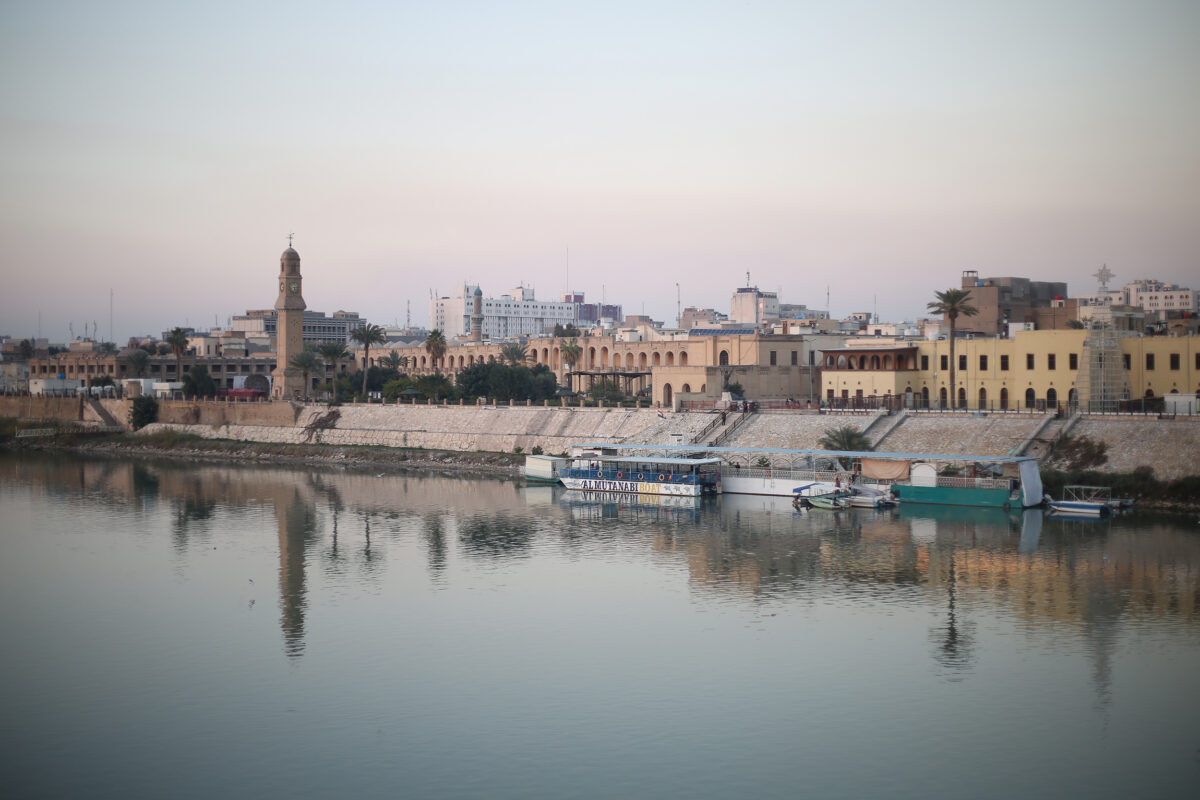
Despite its challenging history, Iraq has experienced its most politically and economically stable period in decades. Improving macroeconomic indicators and increasing international investor interest led Fitch to upgrade Iraq’s credit rating to B- in November 2024. Classified as a Fragile and Conflict-Affected State, Iraq has a significant infrastructure gap and low financial inclusion, which aligns to PIDG’s Strategy 2030 to strengthen and build underdeveloped markets in the Middle East, North Africa and Pakistan region.
PIDG, through its guarantees solution, GuarantCo, provided a partial guarantee to the National Bank of Iraq to grow the bank’s USD 70 million climate adaption and mitigation infrastructure portfolio. This guarantee, covering an existing portfolio of loans, will provide immediate capital relief to NBI, enabling the bank to increase its lending to clients operating across multiple sectors with a climate focus and developmental angle including housing (green/EDGE-certified), manufacturing and agriculture.
63 per cent of capital will support businesses and projects that are contributing to climate mitigation and can be classified as climate finance.
Strengthening the financial sector in Iraq is crucial in the country’s economic diversification and sustainable development away from its oil sector dependency, currently accounting for over half of its GDP.
This transaction, denominated in Iraqi Dinar (IQD) equivalent, will unlock local currency for corporate businesses in Iraq to invest in infrastructure. The country faces a significant infrastructure gap, largely due to decades of conflict and instability and low domestic investment.