People
The project will provide c. 210,000 people and several businesses with improved access to clean electricity.


| Company | KPI Green Energy |
| Sector | Power/Energy |
| Country | India |
| Total Project Cost | USD 50m |
| PIDG Commitment |
|
| Dates of PIDG involvement |
|
India is required to add new renewable energy capacity of 300GW to achieve a targeted installed generation capacity of 500GW from renewable sources by 2030. Domestic debt capital markets will need to play an integral role in achieving this goal.
The market is dominated by large state-backed or private players in sectors like energy and finance, with minimal participation from mid-sized companies. Small-scale renewables projects often don’t meet the investment criteria of institutional investors. Accordingly, India’s green bond market remains underdeveloped, making it hard for smaller renewable firms to access capital.
PIDG partially credit guaranteed (65 per cent) an up to c. USD 76.5 million first green bond issuance by KPI Green Energy, a publicly listed renewable energy developer and operator in India.
This is the first partially guaranteed, externally credit enhanced, domestic green bond issuance by a renewables developer. The bonds will help KPI Green diversify its funding base beyond its existing debt providers, which are mostly banks.
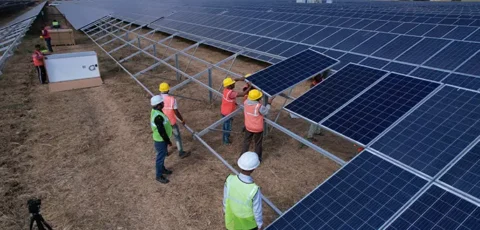
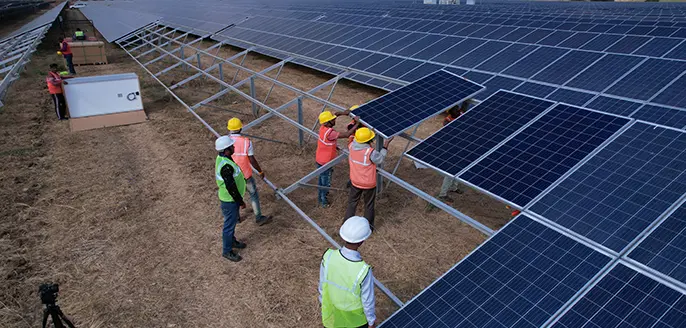
The proceeds of the bond will help KPI Green to expand its solar, wind and hybrid power portfolio capacity across the states of Gujarat.
The project will provide c. 210,000 people and several businesses with improved access to clean electricity.
The funds will be used to support a 150 MW wind power project, which is forecast to avoid more than 344,000 tCO2e.
India’s green bond market remains small, accounting for just 3.8 per cent of the country’s total corporate bonds. This transaction provides a case study for replication.
This transaction will mobilise c. USD 175 million of domestic institutional capital (e.g., infrastructure debt funds, mutual funds, insurance) into renewables.
KPI is growing its team and has committed to working towards a 30 per cent female workforce by the end of 2026.