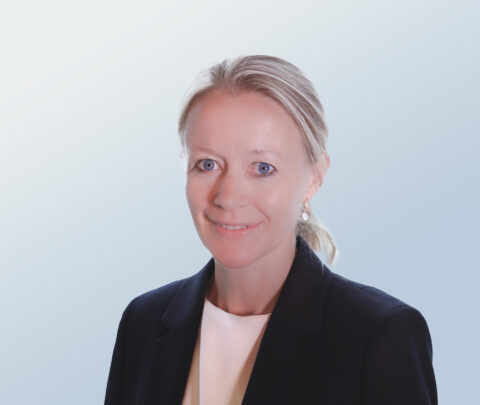

PIDG Chief of Staff and Global Head of Communications, Cecilie Sørhus spoke to SEEK Development‘s DonorTracker about PIDG’s approach with the wider development community, demonstrating the value of blended finance to leverage multiples of our Owner funding for sustainable infrastructure projects across Africa, South and Southeast Asia.
This article was initially published on DonorTracker.
Tell us a bit about the Private Infrastructure Development Group, or PIDG as you are sometimes known?
PIDG was established in 2002 to overcome challenges to the delivery of successful infrastructure projects in Africa, South, and Southeast Asia. To date, we have provided 232 million people with new or improved access to infrastructure: access to renewable energy, safe transportation, clean water and sanitation, digital connectivity, and infrastructure to enhance food security in the face of climate change.
We essentially work to take the risk (or perceived risk) out of infrastructure projects. For example, in Malawi, we co-developed the country’s first two commercial-scale solar projects. This involved working with the government on items such as permits and key documentation, and with communities living close to the project sites. We then worked with our partners to secure the finance needed, ensured that construction adhered to international standards, and began operating two power plants delivering a total of 80MWac of new solar power to the national grid. Having proven the viability of on-grid solar in Malawi, the sector is now attracting interest from other domestic and international investors.
To ‘de-risk’ projects, we can deploy a range of targeted solutions: technical assistance, project development, local currency guarantees and credit enhancement, and long-term debt. These can work together or separately to meet the needs of a specific project or investment.
Blended finance is a term your readers may be familiar with, it involves leveraging development finance to mobilise private sector capital for efforts to achieve the UN Sustainable Development Goals.[i] We focus on infrastructure, but a number of sectors and organisations use blended finance at scale, for example, FSD Africa, and Gavi, The Vaccine Alliance. By adopting this approach, and right-sizing risk to the appetite of each investor, we are able to mobilise many multiples of private sector, institutional, and development finance into sectors and countries where such investors may previously have feared to tread.
Before we invest, we review each opportunity through a gender lens to maximise its positive impacts for women, girls, and other underrepresented groups. We also screen for impact on climate and nature – prioritising those projects that promote climate mitigation, adaptation and resilience – and assess any potential risks to the project to ensure that it will be sustainable in a changing climate.
PIDG is a hands-on investor, we support the businesses we invest into to embed high health, safety, environmental, social, and business integrity standards to ensure that they are well-positioned to attract further finance from the private sector.
PIDG’s six funders are DAC donors — is PIDG funded through ODA?
Yes, but perhaps not in the traditional sense.
Our work is funded by the governments of the UK, the Netherlands, Switzerland, Australia, Sweden, and Global Affairs Canada, and our mandate focuses on delivering sustainable infrastructure in Africa, South and Southeast Asia. Over 50 per cent of our investments are in least developed countries (LDCs). However, crucially, we are also mandated to mobilise additional finance from the private sector.
To do this, we operate as a private company, with our government Owners (rather than donors) acting as our shareholders. We identify projects or businesses with potential to be commercially viable, providing them with equity and technical assistance, alongside our co-development expertise, in order to de-risk them, and attract additional finance. We can also deploy local-currency guarantees, later stage equity, or long-term debt to enable infrastructure projects to reach the investment-grade required to attract traditional lenders. Once a project is operating well, we seek to exit, selling our stake and recycling our Owner funding – and any profits – into new projects.
For every USD 1 of our Owner funding that we spend, we currently mobilise USD 4.70. Since we began, we have mobilised over USD 29.8bn in private sector finance alone.
In recent years, we have diversified our funding sources. For example, with its A2 (Moody’s) credit rating, our dedicated long-term debt solution, the Emerging Africa & Asia Infrastructure Fund (EAAIF), recently secured a USD 100 million loan from the African Development Bank (AfDB), and USD 100m of debt from Export Finance Australia, following on from an earlier debt raise of USD 325 million comprised of finance from Allianz Global Investors on behalf of Allianz Group, ABSA, Standard Bank, and Sumitomo Mitsui Banking Corporation (SMBC), as well as Swedfund, Sweden’s development finance institution.
The nature of our funding and the confidence of our Owners and investors, enables us to be a nimble and patient developer and investor in challenging markets.
Apart from funders, with whom does PIDG collaborate or partner to leverage private capital and deliver its mandate?
It is no secret that ODA is increasingly stretched, and that national governments across Africa, South and Southeast Asia are grappling with increasing infrastructure needs among growing, youthful populations. Investment opportunities abound but work is needed to attract private finance into emerging markets and developing economies (EMDEs).
A key barrier to private sector engagement in our markets is risk perception and, through our role on the EMDE Taskforce, an industry-led initiative convened by the UK Government, we are working to make risk and return data available to investors considering these markets for the first time. This data transparency and standardisation is key to accelerating the flow of private finance for sustainable development.
We partner with a range of entities to leverage private and development capital for our projects. Often, we work with government entities to progress public-private partnerships (PPPs) in sectors such as water and sanitation which can struggle to leverage private capital.
To develop a pipeline of investable infrastructure projects we work with local and international sponsors and developers to co-develop projects from concept to financeable reality, and beyond. We also work to grow existing businesses – such as electric mobility and off grid energy businesses – enabling them to reach the scale required to attract private sector finance. I visited one such business in Kenya recently, meeting a farmer with access to SunCulture’s solar-powered irrigation technology. The technology overcomes the challenges of reliance on rainfed agriculture in a changing climate and displaces the use of diesel pumps. By enabling him to grow crops year-round, the project has increased his income, and he now exports rosemary and thyme.
As I touched on earlier, in order to develop and deliver investment-grade vehicles, we must also work closely with ratings agencies, banks, insurers and asset managers. For example, our guarantee solution is delivering a range of electric mobility projects across India through its framework guarantee agreement with Axis Bank. Our involvement enables Axis Bank to make local currency loans to borrowers in the electric mobility sector which are partially credit guaranteed for up to 10 years, enabling private players to grow India’s electric mobility ecosystem.
To ensure that our projects align with local and national priorities and to structure the required financing to underpin sustainable infrastructure projects and businesses, we also work with grant bodies, non-governmental organisations, multilateral development banks (MDBs), philanthropies, and government entities.
Finally, we unlock new pools of domestic capital – such as pension and insurance funds – which have often overlooked infrastructure. We do this by establishing domestic credit enhancement facilities (CEFs) which are designed to support infrastructure developers to achieve the ratings required to attract such investors locally. We have set these up in Nigeria, Kenya, Pakistan, and Cambodia, and have plans to roll the model out in other countries seeking to expand the role of local-currency finance for climate-aligned infrastructure.
How does PIDG’s approach work in practice?
There’s no ‘one-size-fits-all’ approach but, essentially, we are working across the infrastructure project development cycle to drive down risk and provide other investors with the confidence to come in. This can be through our early-stage support to structure a bankable project, our asset management and impact support to ensure that construction is carried out safely, that the project benefits the communities it was established to serve, and that the business is well-positioned to grow. It can also involve capacity building among investors who may be new to a specific sector or country. The use of financial instruments such as growth equity, debt and guarantees can also build vital investor confidence.
In Viet Nam, multiple PIDG solutions are supporting the development and construction of a rural water treatment plant – Aqua One – which will process up to 150,000 cubic metres of water per day. The plant will reduce pressure on other water sources and improve access to clean water for people living in rural and suburban parts of Phu Tho province (previously Hoa Binh).
On my recent visit to Kenya, I also had the chance to visit our Acorn investment in Nairobi. Acorn is addressing Kenya’s chronic shortage of student accommodation by delivering purpose-built, affordable student housing which is built to internationally recognised green building standards. The buildings are also built and managed with gender and inclusion in mind. The various PIDG solutions have come in over time to support Acorn’s growth. We initially provided a guarantee and technical assistance to enable the company to launch a 5 billion Kenyan Shilling green bond. It was East Africa’s first green-certified bond, and the first to be listed in the United Kingdom and Kenya. Our debt solution then came in as the bond’s largest investor.
As demand rose for Acorn’s high-quality student accommodation, our project development solution invested to anchor two innovative real estate investment trusts (REITs), an instrument which bridges the gap between financial markets and Kenya’s housing sector. Unlike traditional equity investments, REITs offer tax advantages for raising capital, enabling Acorn to rapidly expand its operations. With PIDG involvement providing comfort for new investors, Acorn can raise additional finance from local pension funds to build more purpose-built accommodation for Nairobi’s growing student population.
In 2024, the green bond was redeemed early and, in late 2025, we made a second equity investment which will enable Acorn to expand its offering beyond student accommodation, enabling young urbanites to rent affordable housing close to Nairobi’s business and industrial hubs.
What are your lessons learned for practitioners who are exploring innovative approaches to mobilize resources for sectors with traditionally very low private capital?
The main lesson I would like to share would be to be patient, and to persevere! By listening to the markets in which you operate and being open to developing innovative solutions, you can work creatively to overcome challenges.
Opening up internal channels within your organisation for sharing learning is also key. To this end, PIDG recently integrated our business to bring our teams closer together – sharing expertise between our teams in the UK, Morocco, Kenya, and Singapore.
I would also say, don’t try to reinvent the wheel. There are existing blended finance models and structures which you can draw on and, if necessary, adapt to the context you are working in. Using tried and tested approaches can save you time and can help to build all-important confidence among potential private sector investors.
This leads on to my final thought which is that partnerships are essential; we cannot deliver change at the scale and pace required to address the climate and nature crises alone.
Nurture those partnerships that align with your values – in our case around the need for urgent action on climate and nature, and inclusive sustainable development – and which complement your skills and expertise. Partnerships can also stretch your ambition, enabling you to achieve more.